
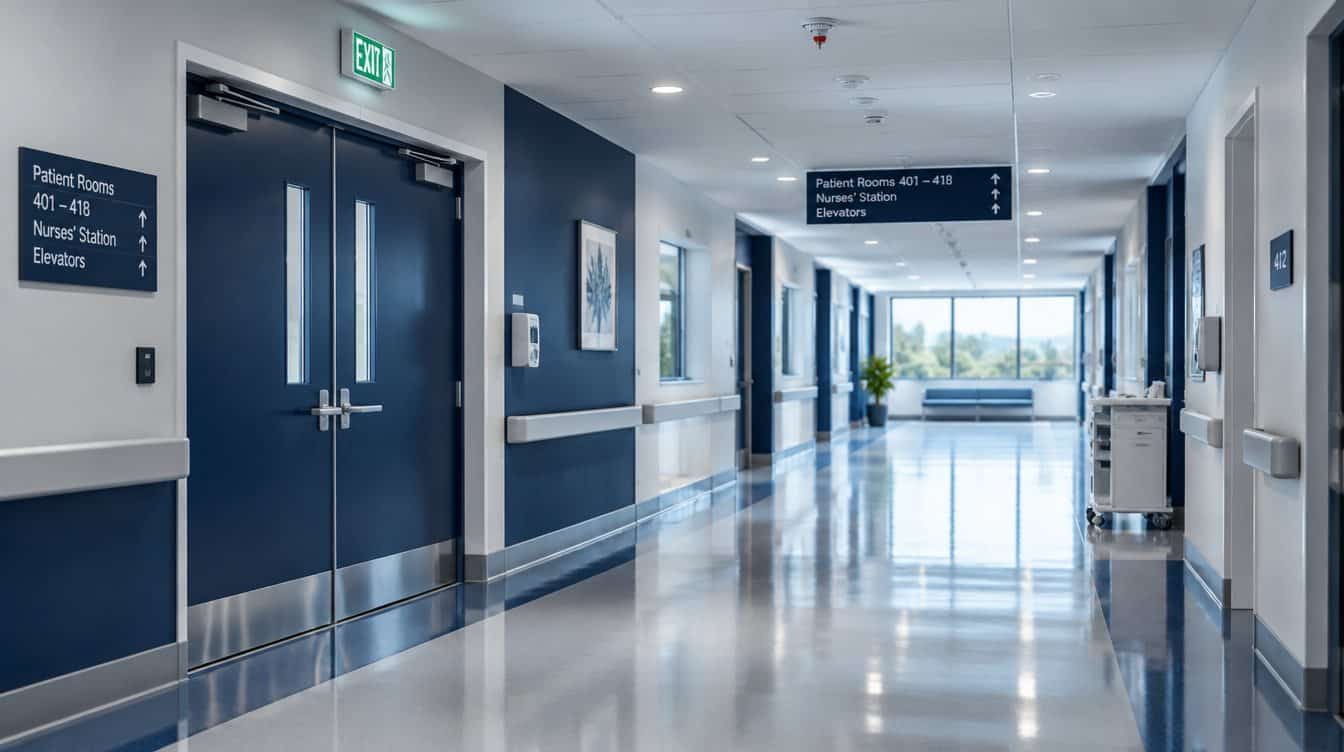
Use it as a working document. Every item that cannot be checked off is a potential finding.
Documentation
- Fire alarm system annual test and inspection reports, with device inventory
- Sprinkler system quarterly and annual inspections, five-year internal inspection
- Fire pump weekly or monthly churn tests and annual flow test
- Emergency generator weekly inspections, monthly load tests, annual test, and transfer switch testing
- Fire door assembly annual inspection records
- Medical gas and vacuum system annual inspection and testing
- Kitchen hood suppression semi-annual inspection
- Portable fire extinguisher monthly checks and annual maintenance
- Fire drill records by shift and quarter
- Emergency lighting monthly functional and annual ninety-minute tests
- Emergency preparedness plan, risk assessment, exercises and training
- Interim Life Safety Measures policy and any active assessments
Building tour
- Rated doors close and latch, no propping devices, labels intact
- Corridors clear, required width maintained, no storage in egress
- Exit signs illuminated, emergency lighting functional, exit discharge clear
- Fire and smoke barriers intact above the ceiling, penetrations sealed
- Sprinkler heads clean, unobstructed, eighteen-inch clearance below deflectors
- Oxygen cylinders secured and stored by quantity requirements
- Electrical panels accessible, no daisy-chained power strips in patient care areas
- Hazardous areas enclosed and doors self-closing
- Soiled utility, storage and mechanical rooms compliant
- Construction areas with ILSM in place
Staff readiness
- Staff can describe the fire response procedure for their area
- Staff know the location of pull stations, extinguishers and medical gas shutoff valves
- Staff know who can authorize medical gas shutoff
- Department leaders know the evacuation routes and smoke compartment boundaries
Frequently asked questions
Begin at least ninety days before an expected survey window, and keep it current year-round if surveys are unannounced.